The number one thing I hear from women who are new to the gym is not “I don’t know how to squat.” It is “I don’t know what to do when I walk in.” Every list of “beginner exercises” leaves you standing on the floor trying to turn it into a session.
So this is a plan, not a list. Three days a week, four weeks, the exact machines and dumbbells we have on the floor at both Body Renew Alaska locations, and a way to know when to add weight. I use a version of it with my personal training clients in their first month, and most of the exercises are the same ones I have recommended here before. What is different is that now you know what order they go in.
Three things that make the plan work
Show up three times a week, lift a little heavier every week, and leave a rest day between sessions. Everything else in this post is detail.
Consistency beats intensity in the first month. A moderate session you repeat twelve times will do more for you than two brutal ones followed by two weeks of soreness and dread. The CDC’s guideline for adults is at least two days a week of muscle-strengthening work that covers every major muscle group; three days gives you that with room to progress. Progression is what turns a routine into results: the same weight for the same reps forever is maintenance, not training. And rest days are when muscle actually rebuilds, which is why the schedule below never puts two sessions back to back.
Three days is not a compromise number. When Nicole Hunter, our September Member of the Month, first heard about the gym, the line that got her in the door was that all it takes for change is going three times a week. She started with simple machine work and cardio, moved on to strength training with me, and eighteen months later she is close to 60 pounds down and in the gym four days a week with her husband. Nobody starts at four. You earn four by being consistent at three.
What a beginner gym routine for women should include
A good beginner routine covers five movement patterns: squat, hinge, push, pull and carry or core. Hit each of them once or twice a week and you are training the whole body without needing to know anything about muscle groups.
The plan below is an upper/lower split with a third full-body day. Day A trains legs and glutes. Day B trains back, shoulders and arms. Day C repeats the big movements at lighter weight and adds ten minutes of cardio. Machines carry most of the load in weeks one and two because they hold you in the right path while you learn the movement. Dumbbells take over more of the work in weeks three and four.
One nuance for women specifically: the most common thing I have to correct is lifting too light for too long. Two-pound dumbbells for a shoulder press will not change anything. The weights in this plan are meant to feel like work by the last two reps of every set.
The 4-week plan at a glance
| Week | Day A: Lower body | Day B: Upper body | Day C: Full body + cardio |
|---|---|---|---|
| Weeks 1 and 2 | 3 sets of 12 | 3 sets of 12 | 2 sets of 12, then a 10-minute incline walk |
| Weeks 3 and 4 | 3 sets of 10, heavier | 3 sets of 10, heavier | 3 sets of 10, then a 12-minute incline walk |
Rest 60 to 90 seconds between sets. A typical week is Monday, Wednesday, Friday, or Tuesday, Thursday, Saturday. If you can only manage two days, do A and B and skip C until you can add it.
Every session starts with the warm-up and ends with the cooldown from later in this post. Budget 45 to 55 minutes door to door.
Day A: lower body
Five exercises, in this order: Smith machine squat, leg curl, Romanian deadlift, Bulgarian split squat, glute bridge. Legs and glutes respond quickly to training, and this is the day most of my beginner clients end up looking forward to.
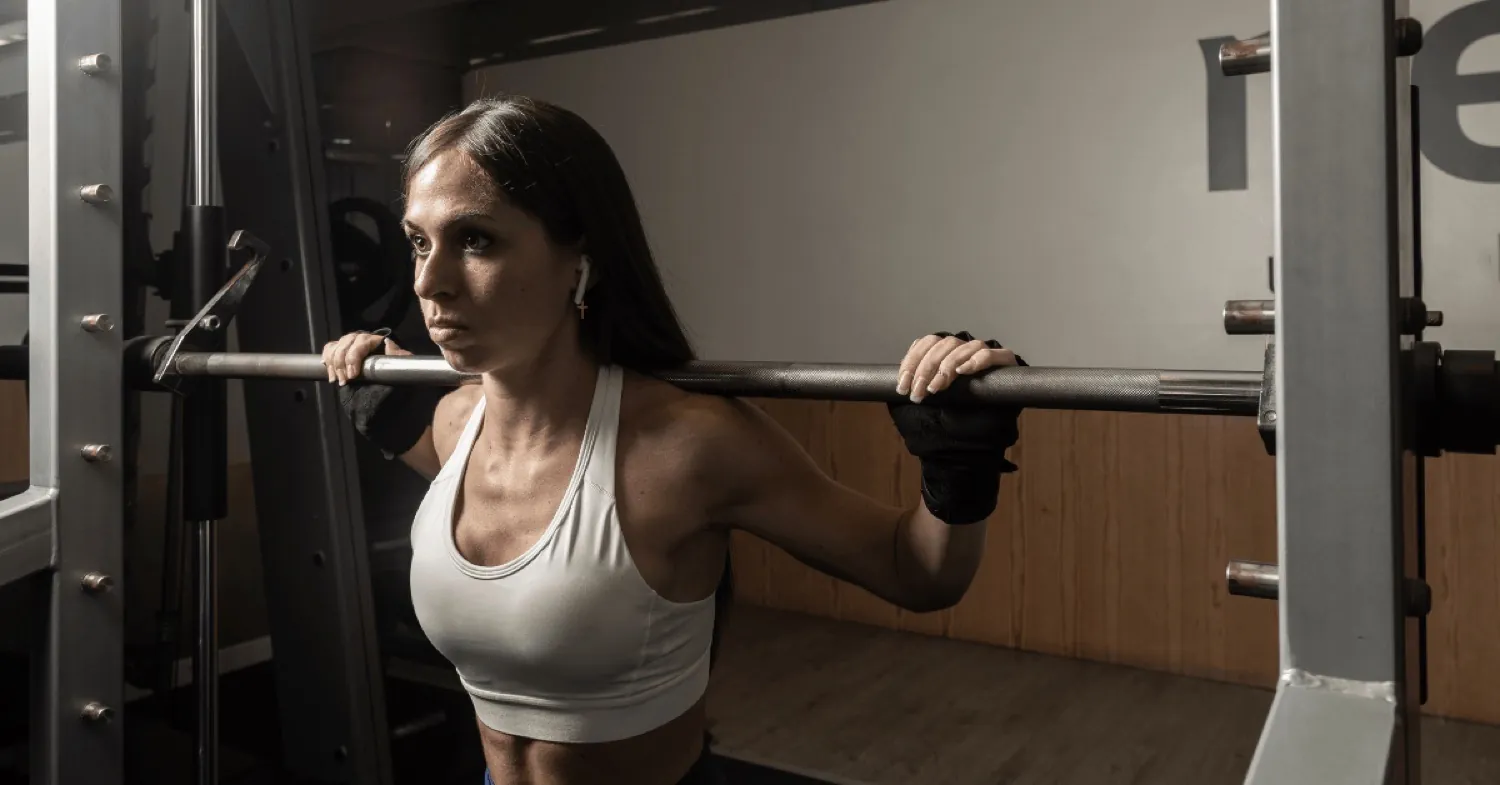
Smith machine squat, 3 × 12. The bar is fixed on a track, so you can focus on depth and knee position without balancing a free barbell. Feet shoulder-width, toes slightly out, lower until your thighs are about parallel with the floor, drive up through your heels. Start with the empty bar. Both of our gyms have Smith machines, so you will never be waiting on a rack.
Leg curl machine, 3 × 12. Lie face down or sit, depending on the machine, and curl your heels toward your glutes. This trains the hamstrings directly, which balances out all the quad work from squats. Set the pad just above your ankles.
Romanian deadlift with dumbbells, 3 × 12. Hold a dumbbell in each hand in front of your thighs, soften your knees, and push your hips back until you feel a stretch in your hamstrings. Stand back up by squeezing your glutes. Keep the dumbbells close to your legs the whole way. Start with 15 to 20 pounds per hand. This is the exercise where new lifters feel the most wobble, so go slow.
Bulgarian split squat, 3 × 10 per leg. Back foot on a bench, front foot far enough forward that your knee stays over your ankle at the bottom. Bodyweight only in weeks one and two. Hold light dumbbells from week three. It is humbling and it is the single best glute exercise I know.
Glute bridge, 3 × 15. Lie on your back, knees bent, drive your hips up and squeeze at the top for a second. Bodyweight to begin, then a dumbbell across the hips. A good finisher that also teaches the hip drive you need for the deadlift.
Day B: upper body
Five exercises: assisted pull-up, machine chest press, dumbbell shoulder press, dumbbell row, cable curl. Two pulls, two pushes, and arms at the end.
Assisted pull-up machine, 3 × 10. Kneel on the pad, grab the handles, and pull until your chin clears your hands. The counterweight makes the movement possible from day one. Set it so the last two reps are hard. Reduce the assistance by one plate each week. Getting to an unassisted pull-up is a months-long goal, and this machine is how you get there. One of my clients, Germaine, had never done a single pull-up in his life and now does a few in a row in his 40s. Same machine, same method, just repeated.
Machine chest press, 3 × 12. Sit, handles at chest height, press straight out. This gives your chest and triceps their work without the balance demands of a dumbbell bench press. Add that later.
Dumbbell shoulder press, 3 × 12. Seated with back support, dumbbells at shoulder height, press up until your arms are straight. Start with 10 to 15 pounds per hand. Keep your ribs down and do not arch.
Dumbbell row, 3 × 12 per side. One knee and one hand on a bench, pull the dumbbell to your hip, elbow close to your body. Rows build the upper back and posture, which most people need more than they realize. Start with 15 to 25 pounds.
Cable curl, 3 × 12. Straight bar on the low pulley, elbows pinned to your sides. The cable keeps tension the whole way, and it is easier to control than dumbbells when you are learning.
Day C: full body and ten minutes of cardio
Day C repeats the big patterns at lighter weight and finishes with an incline walk. Four exercises: goblet squat, dumbbell row, incline push-up, plank.
Goblet squat, 2 to 3 × 12. Hold one dumbbell against your chest and squat. This is the free-weight cousin of the Smith machine squat and the bridge to a barbell later.
Dumbbell row, 2 to 3 × 12 per side. Same as Day B, slightly lighter.
Incline push-up, 2 to 3 × 10. Hands on a bench or the Smith machine bar set at hip height. Lower the bar each week. Floor push-ups come when you can do three sets of ten on a low bar.
Plank, 3 × 30 seconds. Elbows under shoulders, hips level. Add ten seconds a week.
Then walk on the treadmill at an incline of 6 to 10 percent and a pace where you can still talk, for ten minutes in weeks one and two and twelve in weeks three and four. That is enough cardio for the first month.
How to warm up and cool down
Five minutes of easy movement before you lift, five minutes of stretching after. Skipping either is the fastest route to a tweaked back and a week off.
Warm up with five minutes on the bike or treadmill at an easy pace, then two light sets of the first exercise of the day before your working sets. A review of randomized trials found the weight of evidence favors a lower injury risk when you warm up, and in my experience the people who skip it are the ones who end up taking weeks off. Cool down with a slow walk and hold each of these for 30 seconds: hamstring stretch, hip flexor stretch, chest stretch in a doorway, and a child’s pose. If you are at our South Anchorage location, ten minutes in the sauna afterwards is a good habit for recovery and a good reason to come back.
How much weight should you lift?
Pick a weight where you finish each set with two or three reps left in you. If you could have done five more, it was too light. If your form broke down before the last rep, it was too heavy.
This is called leaving reps in reserve, a scale validated in the Journal of Strength and Conditioning Research for both new and experienced lifters, and it is how you progress safely without a coach standing next to you. In weeks one and two, err on the light side and learn the movements. From week three, when a set feels like you had four or more reps left, add five pounds on dumbbells or one plate on a machine the next session.
Form matters more than the number in this phase. Hannah Burke, who came back to the gym after having two kids and had always stuck to cardio, told me later that within her first few sessions she realized she had been using incorrect form on almost everything. Small adjustments, and she started seeing muscle growth almost immediately. She had been working hard for years. She just had not been working the right muscles. If a lift feels wrong, ask someone on the floor before you add weight to it.
Your first day, step by step
Arrive with the plan on your phone, do the warm-up, then Day A exactly as written with the lightest weights on the list. That is the whole first day.
Come in at a quieter time if you are nervous. Mid-morning and early afternoon are calm at both our gyms, and members have 24/7 access, so a 6 a.m. or 9 p.m. session is an option if that suits you better. Walk the floor once before you start so you know where the Smith machine, leg curl and dumbbell rack are. Ask a staff member if anything is unclear; that is what we are there for.
The nuance: your first session will feel awkward, and that is normal. By the third session you will know where everything is and the awkwardness disappears. Nobody is watching you. Everyone is watching themselves.
Mistakes I see most in the first month
Going too light, skipping rest days, and quitting the first week you miss a session. Those three account for most of the people who stop.
Too light is covered above. Skipping rest days feels productive and produces soreness, stalled lifts and eventually an excuse to stop. Missing a session is not failure; it is Tuesday. Go on the next scheduled day and pick up where you left off. The plan is written for four weeks so that one missed session is a blip, not a collapse.
Two smaller ones: holding your breath (exhale on the effort), and changing exercises every week because something on social media looked better. The exercises here are boring on purpose. Boring is what you can progress.
What results to expect and when
Strength climbs in the first two to three weeks. Visible changes take six to twelve weeks. Sleep and energy usually improve before either.
The early strength gains are mostly your nervous system getting efficient at the movements, which is why the weights go up so fast in the first month. Research on neural adaptation to resistance training shows that in the first weeks, improved nerve-to-muscle signalling drives most of the strength gain, and a 2017 study found that change in neural drive was the single best predictor of how much strength a person gained over a short program. Muscle and body composition changes are slower and easier to miss in a mirror. That is why we scan new members on an InBody at the start rather than relying on the bathroom scale.
Two of our members show the range. Stephenie Johnson joined in January just after her 55th birthday with an old knee injury, trained with Jay at a deliberately slow pace, and six months later was 30 pounds lighter and had not been injured once. Her own words were that progress was being made but she simply could not see it at first. Hannah, on the other hand, saw changes within weeks once her form was fixed. Both are normal. Hannah’s line to new members is the one I would tape to the mirror: progress isn’t linear, and the results you want might be just around the corner.
After week four, run the same plan again with heavier weights, or book a consult and we will build the next block around what you want to work on.
Doing this at Body Renew
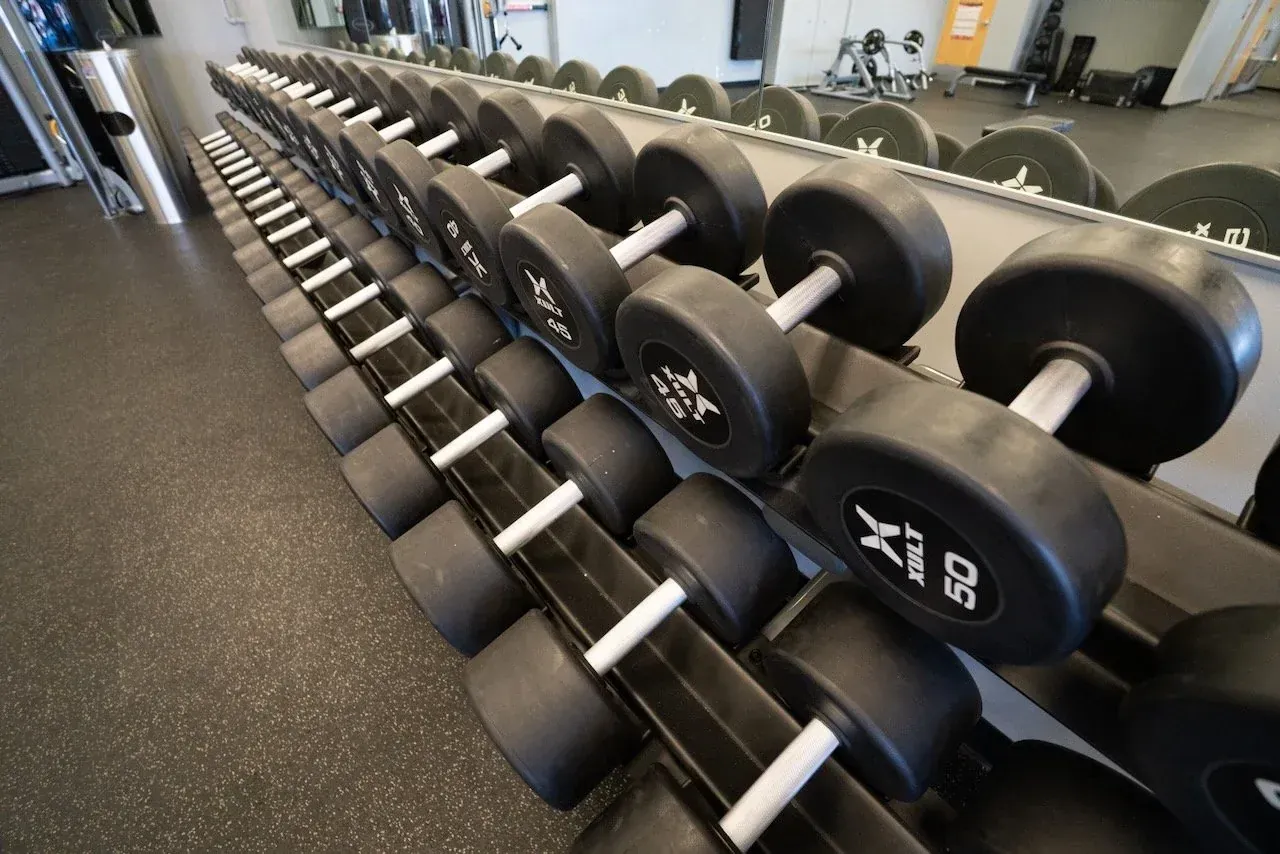
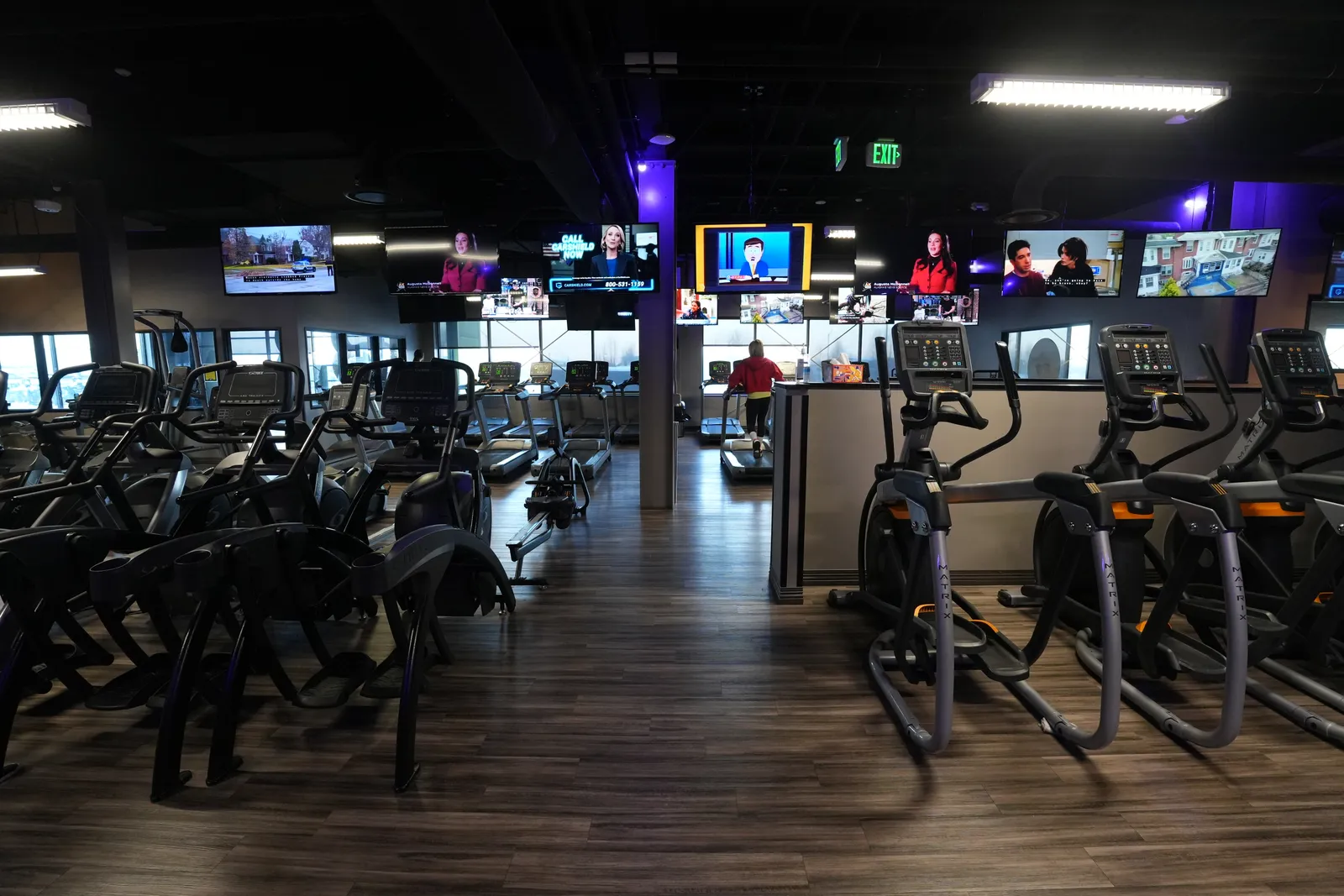
Everything in this plan is on the floor at both gyms: Smith machines, cable stations, the assisted pull-up machine, leg curl, chest press and full dumbbell racks, plus treadmills with incline. Members have 24/7 access, so the schedule bends around your life rather than the other way round.
If you would rather have someone show you the movements the first time, our personal trainers offer a free Starting Point consult: an InBody scan, a walk through the plan, and a clear next step. And if you are not a member yet, you can try BR Signature free for seven days at either location and run week one of this plan before you decide anything. Details on memberships are here, and you can find the South Anchorage gym and the East Anchorage gym on the locations pages.
Start Monday. Week one is the hardest one, and it is only three days.
Frequently Asked Questions
How many days a week should a beginner woman go to the gym?
Three days a week, with at least one rest day between sessions. That is enough to build strength and the habit without leaving you too sore to come back. Two days still works if three is not realistic yet.
How much weight should a beginner woman lift?
Start with a weight that lets you finish every set with two or three reps left in the tank. If you could have done five more, go up next time. If you could not finish the set with good form, go down. Nobody at the gym is tracking the number on the plate.
What is the best gym routine for a female beginner?
A full-body or upper/lower split done three times a week, built on a handful of compound movements: squats, hinges, presses, rows and pull-downs. Machines are fine to start. Add a short warm-up and a cooldown and you have everything you need for the first month.
How long does it take to see results from a beginner gym routine?
Strength goes up within two to three weeks because your nervous system learns the movements fast. Visible changes usually take six to twelve weeks of consistent training. The scale is the least useful measure early on; strength, sleep and how your clothes fit tell you more.
Should I do cardio or weights first as a beginner?
Weights first, then cardio. Lifting while you are fresh keeps your form safe, and a ten-minute incline walk afterwards is plenty of cardio for the first month.