
Mental Health in Anchorage: How Movement, Routine, and Community Help Alaskans Through the Long Winters
May is Mental Health Awareness Month, which is especially important to us for a couple of reasons. Firstly, your mental health, just like your physical fitness, is a part of your overall wellbeing, and will directly impact your fitness.
Secondly, talking about mental health is especially important for Alaskans like those in Anchorage who frequent our gym. The dark winter months and isolation can take a serious mental toll on your health, and the data backs this up.
Taking care of your mental health in Anchorage should not be overlooked. To help, we will cover what the research says, how locals reportedly cope, and practical insights to help Anchorage residents like you feel strong and more resilient, elevating your overall health and wellness so you can excel at the gym, and in life.
How Common Is Depression in Alaska?
Depression is alarmingly common in Alaska, with nearly 22% of all Alaskan adults having been diagnosed by a health professional with a depressive disorder. That puts Alaska right in the middle of national rankings, but the underlying realities here make those numbers hit harder than the rank suggests.
According to the United Health Foundation, Alaska does not rank among the highest per capita of residents with depressive disorders. That being said, depression and poor mental health is on the rise in America, and Alaska's numbers are still alarmingly high. In fact, according to the National Alliance on Mental Illness, 1 in 5 adults in the USA experience mental illness every year. In Alaska specifically, that's over 108,000 residents.
After serving the Anchorage community at Body Renew for close to two decades, we've seen firsthand how the seasonal rhythm of Alaska shapes our members' mental and physical health, often in ways that aren't obvious until you've lived through a full year here. While mental illness is a national, let alone global, crisis, there are specific nuances in Anchorage and Alaska that aggravate mental health conditions.
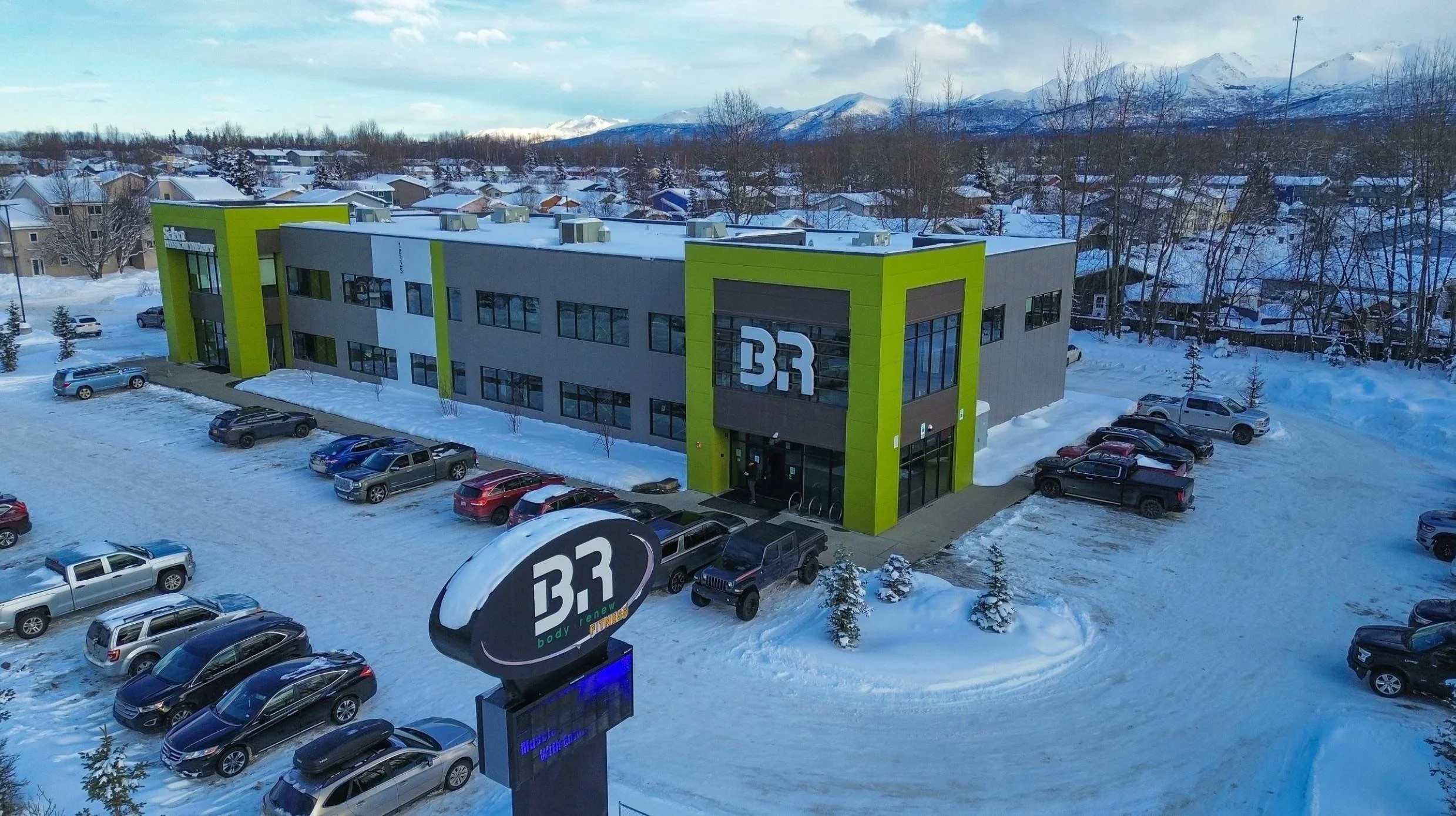
The cold winter months in Anchorage can deter many from staying physically active.
Why Are Alaska's Mental Health Numbers Different?
Alaska's mental health challenges stand out because of three compounding factors: extreme seasonal daylight changes, severe shortages of mental health providers, and barriers to affording care. Each of these alone would strain a community; together, they create unique pressure on Alaskans.
One of the biggest factors, and probably the most well known one, is Alaska's limited access to daylight during the winter months. With roughly 40% of Alaskans residing in Anchorage, this is compounded even more in our city. Fortunately, there are natural food sources and supplements locals can take to offset the effects of seasonal depression in Alaska. However, the limited daylight and harsh cold can lead to isolation, loneliness, and subsequently poor mental health.
Daylight alone isn't the only factor contributing to Anchorage's high rates of mental health disorders. According to the National Alliance on Mental Illness, there are several other factors at play:
377,740 Alaskans live in a community without enough mental health professionals; that's more than half the state's population in a mental health provider shortage area.
Alaskans are over 2x more likely to be forced out-of-network for mental health care than for primary care, making it harder to find and more expensive when they do.
Of the 29,000 Alaska adults who didn't get needed mental health care, 42.1% cited cost as the reason.
11.5% of Alaskans are uninsured.
Cost, geographical location, and lack of access to proper mental health care all contribute to Alaska's high occurrence of mental health disorders in adults.
What Is Seasonal Affective Disorder, and Why Does It Hit Alaskans So Hard?
Seasonal Affective Disorder (SAD) is a type of depression triggered by the seasonal change in sunlight, and it disproportionately affects Alaskans because of our extreme winter daylight loss. In Anchorage, where roughly 40% of the state lives, we only get about 5.5 hours of daylight at the winter solstice.
Seasonal Affective Disorder impacts many who endure the harsh winter, low sunlight months in Alaska. The sun also sits low in the sky due to Alaska's geographical location, which means the UVB rays needed for Vitamin D production are too weak to do much during the winter months. Vitamin D levels are believed to impact serotonin (the happy hormone); the lower the Vitamin D, the more likely you are to experience seasonal depression.
That's a bit more of a deeper dive into the seasonal components that impact the Alaskan community, especially during the winter, and make it challenging for them to maintain top physical fitness. There are specific scenarios though only locals know firsthand that paint a little more color on the challenges.
What Do Anchorage Residents Say Is Their Biggest Barrier to Staying Healthy?
When we asked Anchorage locals directly about their biggest barriers to staying in shape, three themes came up repeatedly: weather and seasonality, depression and low motivation, and time and lifestyle constraints. These firsthand insights from our community paint a clearer picture than national averages ever could.
We asked several locals in our Anchorage community and we received overwhelming feedback, as well as several repeated themes. These are firsthand insights from Anchorage locals on what makes it hard for them to stay in good health; some of the top responses included:
Weather was by far the most cited reason, but it was not just SAD. The cold, heavy snow makes it difficult for many to navigate to the gym or move their body more than usual. We also heard consistent themes about summer, as well; whereas winter is harsh, summer in Alaska is beautiful, and many found it difficult to make time for the gym amidst their outdoor activities.
Depression and low motivation were the second most cited source. We see this loop all too commonly, where feelings of low mental health induce less exercise, which aggravates the already depressive symptoms. Not all responses, as well, were related to SAD, but some who had physical ailments and job requirements that made it hard for them to stay active.
Time, energy and lifestyle inhibitors were the third most common theme. Many said that lack of childcare, support, and time in their busy schedules made it difficult for them to attend a gym. One resident said that "I am barely surviving day to day, like a lot of people… The gym is a luxury of time and energy that I just can't afford."
However, in the midst of these reports, there were also a lot of positives, including the location of Anchorage, with several citing the unique landscape as a prime spot for staying in shape by taking advantage of outdoor activities like skiing, biking, hiking and kayaking. These factors blend right into our main purpose with this article; how exercise can really help and how to take the best advantage of it in Alaska.
Does Exercise Really Help With Depression?
Yes, the evidence for exercise improving depression is strong and consistent. In some cases, regular exercise has been shown to be comparable to traditional medication for managing depressive symptoms, especially mild to moderate depression.
There is remarkably, and overwhelmingly, strong evidence for the benefits of exercise on depression. This suggests that exercise, when paired with your medical practitioner's recommendations, can be a powerful tool for combating poor mental health.
Our trainers consistently see members struggle with motivation in January and February, but the ones who maintain even two sessions a week through the dark months report the biggest mood differences.
For Anchorage residents specifically, the battle is not necessarily "is exercise going to help me" but rather "how do I overcome the barriers to integrate it into my life?" There are a few ways in particular that we recommend to our members here at Body Renew that we feel will help you add exercise, and wellness in general, more regularly into your own life.
What Are the Best Strategies for Staying Mentally Well in Anchorage?
The best strategies are the ones tailored to Alaska's unique seasonal rhythm: moving indoors when winter is brutal, taking advantage of every sunny day, building social accountability, and using tools like sauna and sleep hygiene to support recovery. Below are the specific approaches we recommend to our members at Body Renew.
Take it indoors when the weather is brutal: Don't force yourself to run in -10 if you really don't want to (but hey, if you feel up for it, go for it!). A gym like ours has designated rooms, cardio spaces and heavy weights so you can shield yourself from the cold.
Get outside when the sun is shining: Research shows that even moderate exposure to the sun can have a positive impact on your mood. On the bluebird days in Anchorage, get outside by taking the dog for a walk, walking with a friend, or going for a bike ride.
Make fitness a social event: Speaking of getting social, that's one of the best ways to increase your accountability when it comes to fitness. You can join a group fitness class,train with a personal trainer in a group setting, or join a hiking club to form stronger bonds and push each other to stay fit.
Try a sauna for stress and recovery:The benefits of raising your internal body temperature with a sauna are numerous, but specifically, saunas can have a positive impact on your depression with a session that can last for weeks. That's why we enable unlimited access to our sauna for all membership levels, year-round.
Modify your sleep patterns depending on the season: It can be easy to stay up to midnight and easily watch your sleep decline during the summer. The long days trick our mind, and then we end up missing out on the one thing that powers all other health benefits. Without good sleep, you can't obtain the health benefits you desire in the gym, with your mental health, and with your performance at work. Plan to wind down around the end of the day, using blackout curtains and limited electronics to improve your sleep cycles. During the winter, make it as comfortable and light as possible for you to get out of bed at a decent time and start your day with success.

The cardio area at Body Renew Alaska, fully separate and upstairs from the heavy weights.
Frequently Asked Questions
Is depression more common in Alaska than other states?
According to the United Health Foundation, Alaska is ranked 25th in the nation, right in the middle when it comes to depressive disorders. However, Alaska faces unique challenges like provider shortages and limited daylight that compound the impact on residents.
Can exercise really help with seasonal depression?
Yes, there is overwhelming evidence that exercise can help with depressive symptoms, in some cases rivaling traditional anti-depression medication. Exercise should complement, not replace, professional mental health care.
How much exercise do I need for mental health benefits?
Research shows that 15 minutes a day has benefits, but benefits improve with more frequent, longer sessions. Even short sessions of 10 to 15 minutes broken up throughout the day can add up to meaningful mood improvement.
What can I do about seasonal depression in Anchorage?
There is not one easy answer, but start by following the advice in this article: connect with support groups, exercise regularly even during the winter months, and prioritize sleep. The Department of Health and NAMI Alaska both have online resources to help.
Does sauna help with depression or stress?
Yes, studies show that saunas and raising your internal body temperature can have lasting benefits on your mental wellbeing. A randomized trial published in JAMA Psychiatry found that even a single session of whole-body heat exposure reduced depression symptoms for up to six weeks.
Create a Wellness Routine That Works for You
The best wellness routine is the one you will actually stick with, and starting small is the most reliable way to build lasting change. Two days at the gym, one day at home, 15 minutes at a time is a perfectly valid starting point.
At the end of the day, the best fitness routine is one that you will stick with, and it's a crucial part of your overall wellness. If you are brand new to fitness, or starting out after a long hiatus, pick something feasible, like two days at the gym, one day at home. Start with 15 minutes and work your way up; even this can make a positive difference. Gamify it if you can and challenge yourself to slowly increase weights, time and intensity.
We understand that this can be overwhelming and you might need additional guidance; if that's the case, schedule a free consultation with one of our personal trainers, and we will do our best to help guide you to a plan that works for your budget, and your schedule.
Overall, mental health needs to be taken seriously. Your physical health will impact your mentality, and vice versa; there is only one of you, so make sure you make the best investment you can and take your own health seriously. Your future self will thank you.

About The Author
Chris is an ISSA Master Trainer who believes lasting results come from mutual respect and a solid plan. He pairs years of hands-on training experience with a grounded, upbeat coaching style that keeps your goals front and center. Whether you're just getting started or ready to push to the next level, Chris will help you put in the work and make it happen. Learn more about Chris and his experience.