Getting in shape after 40 is one of the most common goals we hear on the gym floor. It almost always shows up with a quiet worry attached: did I wait too long? Here is the honest answer from two trainers who field this question every week. No, you didn’t. And the research has your back. In a 2019 study of more than 315,000 adults, the people who got active in their 40s and later cut their mortality risk by roughly as much as folks who had trained their whole lives. You are not trying to turn back the clock. You are undoing some deconditioning and pointing your body in a better direction, and that is very much within reach.
The two of us behind this guide are Jay Millington, a former Body Renew General Manager, who has spent more than 15 years in fitness and comes from an exercise science background, and Mia Hickok, a former Body Renew trainer with a focus on mobility and building a body that still works at 70. Between us, we have walked a lot of Anchorage members through this exact crossroads.
One thing before you jump in: talk to your doctor before starting a new program, especially if you have existing health conditions or you have been inactive for a while. Five quiet minutes now beats a bad surprise later.
Quick road map: figure out where you honestly stand, get real about what changes in your body after 40, build something that survives contact with your actual life, train the stuff that matters, and drop the stuff that holds you back.
First, Get an Honest Picture of Where You Are
You can’t build a smart plan on a fantasy. Before you change a single thing, grab a notebook and spend ten honest minutes here. Truthful, not aspirational.
- How many days a week do you actually train? Not your best week ever. Average the last month.
- How long are your sessions, really?
- What are you doing in there? Strength, cardio, upper, lower. Get specific, because “I work out” hides a lot.
- Your weight, height, and roughly where that lands for your frame. Quick caveat we give everyone: BMI is a rough screening number, not the whole story, and plenty of muscular people read as “overweight” on it. Put it next to your waist measurement, how your jeans fit, your energy, your strength, and bloodwork from your doctor. We care about health and function here, not one number on a chart.
- Your real life. Work hours, kids, the commute, the budget, the fact that it is dark and cold for a good stretch of the year. Write down what is working against you and what is working for you.
That rundown is exactly what a trainer does with you in a first session, and it tends to land harder with a second set of eyes on it. If you want a real baseline, book a free Starting Point consult: an InBody body composition scan and a sit-down to map your goals. You can also work with one of our trainers one-on-one at either Anchorage location.
How Your Body Changes After 40
None of this is meant to scare you off. It is here so your plan fits the body you have now instead of the one you had at 25.
Your hormones shift. For women, perimenopause and menopause change how estrogen behaves, and that shows up in body composition, recovery, and where fat likes to settle. For men, testosterone slides down slowly, which makes muscle a little harder to hold onto. The fix is the same for both, and it is a good one: strength work and enough protein matter more now, not less.
You lose muscle when you stop using it. The technical name is sarcopenia, and it is the number one reason to lift. Left untrained, adults drop roughly 3 to 5 percent of their muscle each decade after 30. Now the good news, because there is a lot of it: that slide is mostly preventable, and much of it reverses once you start resistance training.
Bone density drops too, especially for women after menopause. Weight-bearing movement and resistance work help you keep it.
Joints and connective tissue change, so you might feel stiffer than you remember. The move is not to stop. It is to load smart, actually do your mobility work, and respect your form.
The Metabolism Myth, Reframed
You have heard it a hundred times, and maybe said it yourself: “my metabolism died in my 40s.” It is one of the stickiest ideas in fitness, and it is mostly wrong.
A large 2021 study in the journal Science tracked energy expenditure across thousands of people and found something that surprises almost everyone: resting metabolism holds pretty steady from about age 20 to 60. It does not really start dropping until after 60. So what is actually going on in the meantime? You are carrying less muscle, so you burn a bit less at rest. You are moving less during the busy career-and-family years. And your hormones are rearranging the furniture. None of that is a broken metabolism.
Jay puts it this way. “When a member realizes their metabolism is not the enemy, you can almost watch their shoulders drop. You are not fighting your own body. You are up against muscle loss and a slower daily pace, and both of those bend to strength training and movement. That is a fixable problem.”
Building Your Plan for Getting in Shape After 40
Once you have taken inventory, you build. Already active? Expect tweaks, not a teardown. Starting from scratch? You are pouring a foundation, which is a great place to be. A few things hold true no matter which camp you are in.
Know your why. This is the thing that gets you out the door on a black February morning when the car does not want to start either. Keeping up with your kids or grandkids, more energy, more years, feeling strong in your own skin. Write it down, and put it somewhere you will actually see it.
Do not go it alone. This is where a gym earns its keep. A trainer keeps you accountable and hands you a plan built for your body. Group classes give you structure and a little variety. And the other regulars are half the reason you show up on the days you would rather stay under the covers. The best exercise is still the one you will keep doing, so if that is hiking Flattop, dancing, or a class you love, go do that.
“I came in about fifty pounds overweight and terribly out of shape. I am also not a gym person, so this has been a big learning curve. I have been working with Jay three times a week, and he has always taken the time to respectfully and patiently answer my many questions. It has been four months now, and I feel strong and agile in my body.”
Stephenie Johnson, Body Renew Alaska member
Fit it to you. Your plan should match your fitness, your history, and your limitations, not some influencer’s highlight reel.
Stay realistic, and stay consistent. Small and repeatable beats heroic and sporadic, every single time. Push yourself, but keep it inside sane limits. Going hard with no recovery catches up with you fast after 40.
What to Actually Build Into Your Routine
If you remember one line from this whole thing, make it this one: lead with strength.
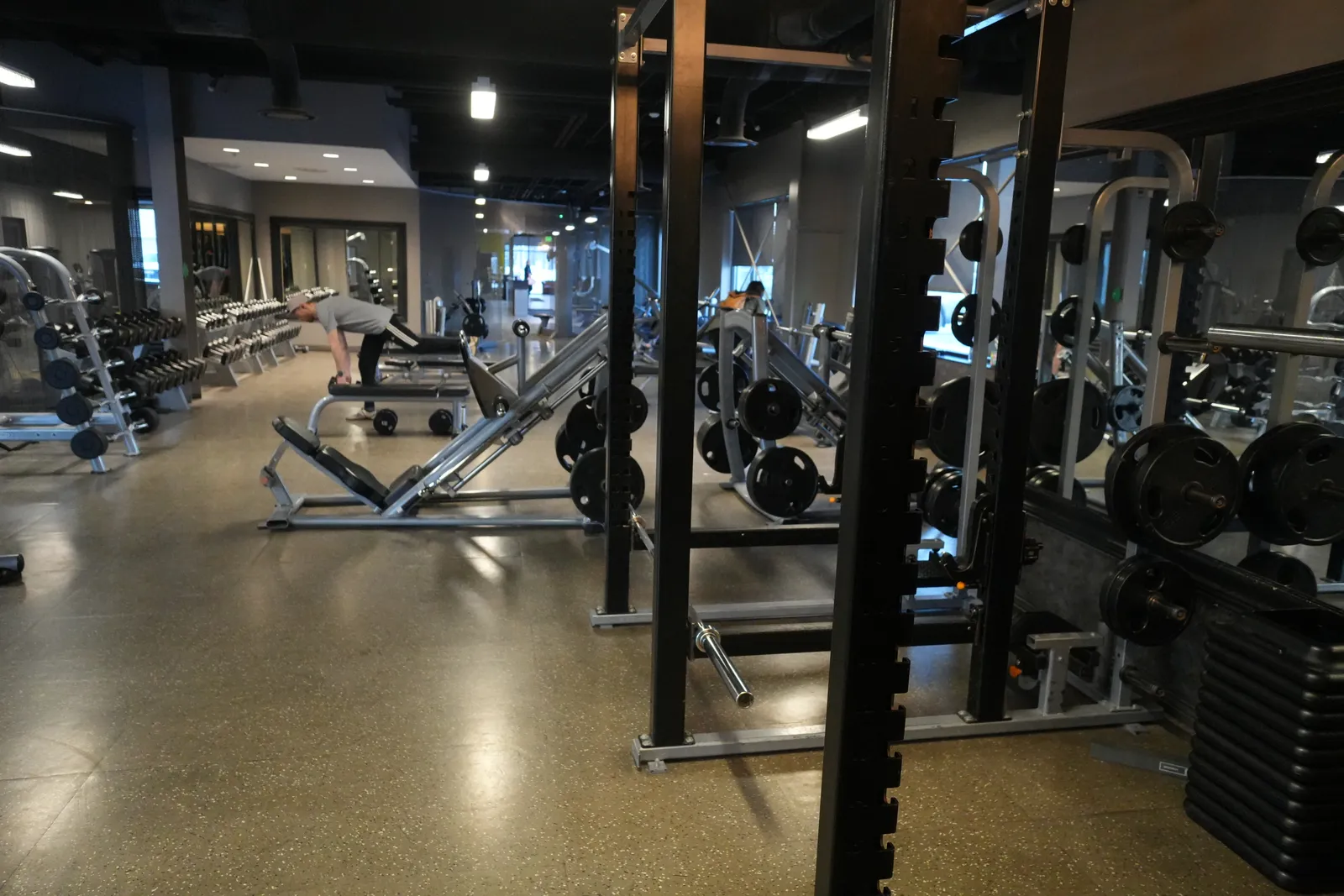
Strength comes first. It is the highest-return thing you can do at this age, full stop. It fights muscle loss, it backs up your bones, and it protects your joints. Aim for two to three full-body sessions a week, built on the big movements: squat, hinge, push, pull. Go lighter than your ego wants, and earn the weight by getting your form dialed in first.
“Strong is the goal, not sore,” Mia says. “I have come back from some ugly injuries as an athlete, and the thing that stuck with me is that clean mechanics are what let you keep training for decades. After 40 we are not chasing one killer session. We are building a body that still moves well at 60 and 70.”
Keep food simple. Protein first so you hold onto muscle, mostly whole foods, enough fiber, and enough water. You can’t out-train a bad diet, but you also do not need a crash plan or a 30-day cleanse. Ask your doctor to run bloodwork on the markers that matter, vitamin D included, which is a bigger deal up here than almost anywhere. We got into that in our post on staying on top of vitamin D through Alaska’s dark winters.
Actually do your mobility work. Dynamic warm-ups, some stretching, a mobility or yoga session in the rotation. It fights the stiffness that sneaks in and keeps your joints happy. Our group classes make that easy to fold in without you having to design a thing.
Keep cardio in balance. Your heart and lungs still want attention, so mix easy steady work with the occasional interval. And do not sleep on plain daily movement. A 2023 meta-analysis found the drop in mortality risk kicks in around 4,000 steps a day, which is a very gettable number. Just do not let cardio elbow strength out of the schedule.
Respect recovery. This is the one almost everyone skips. Your recovery needs go up with age, not down. Sleep sorts out your hormones, rest days are when you actually adapt, and reading your own body is a skill worth building.
Track the right things. Strength numbers, measurements, progress photos, energy, bloodwork. The scale is one data point, and usually the least interesting one in the bunch.
What to Avoid After 40
Sometimes progress is just subtracting the stuff that quietly works against you.
All cardio, no strength. The most common mistake we see, by a mile. Members rack up hours on the treadmill while their muscle quietly walks out the back door. Cardio is great. Strength is the part that protects you.
Training like you are 25. Ego lifting, skipping the warm-up, blowing off recovery. It all comes due eventually. Train the body you have today, not the one from your intramural glory days.
Pushing through pain. Discomfort is part of the deal. Sharp or lingering pain is a message, not a merit badge. Check your form, back off, and get eyes on it from a professional. Nine times out of ten a small form fix sorts it out.
Eating like it is still 1999. Less activity and less muscle change what your body needs. Think quality and protein, not punishment.
Skipping the boring stuff. After 40, stretching and recovery are not extras you get to skip. They are what keep you in the game and off the injury list.
It Is Never Too Late to Start
Your body has changed, so your plan gets to change with it. But here is what the research says and what we watch happen on the floor every week: it is never too late, and strength plus consistency do most of the heavy lifting. This is the same guidance our trainers give Body Renew members every day, and the best part is you do not have to sort it out by yourself.
Ready to start getting in shape after 40? Come see us. Get in touch and we will help you set up a starting-point assessment at either Anchorage location.

Frequently Asked Questions
Is it too late to get in shape after 40?
Not even close. Research shows adults who get active in their 40s and beyond can see health benefits on par with lifelong exercisers. The best time to start was years ago. The second best time is today.
What is the best exercise after 40?
Strength training, because it directly fights age-related muscle loss and supports bone density. Pair it with low-impact cardio and regular mobility work. The best routine, though, is the one you will actually stick with.
How many days a week should I work out after 40?
Three to four days that mix strength and cardio works well for most people, with rest days built in to recover. What you do across the whole week matters more than any single brutal session.
How long does it take to get in shape after 40?
Strength and energy usually pick up within a few weeks. Visible changes tend to take a couple of months of steady training and decent nutrition. Progress after 40 is very real. It just rewards patience.
Should I do cardio or strength training first?
If strength is the point of that day, lift first while you are fresh and your form is sharp. Otherwise, start with whichever one matches your main goal for the session.
Can you build muscle after 40?
Yes. With progressive strength training and enough protein, building muscle after 40 is very doable. It might come on slower than it did at 25, but it comes.