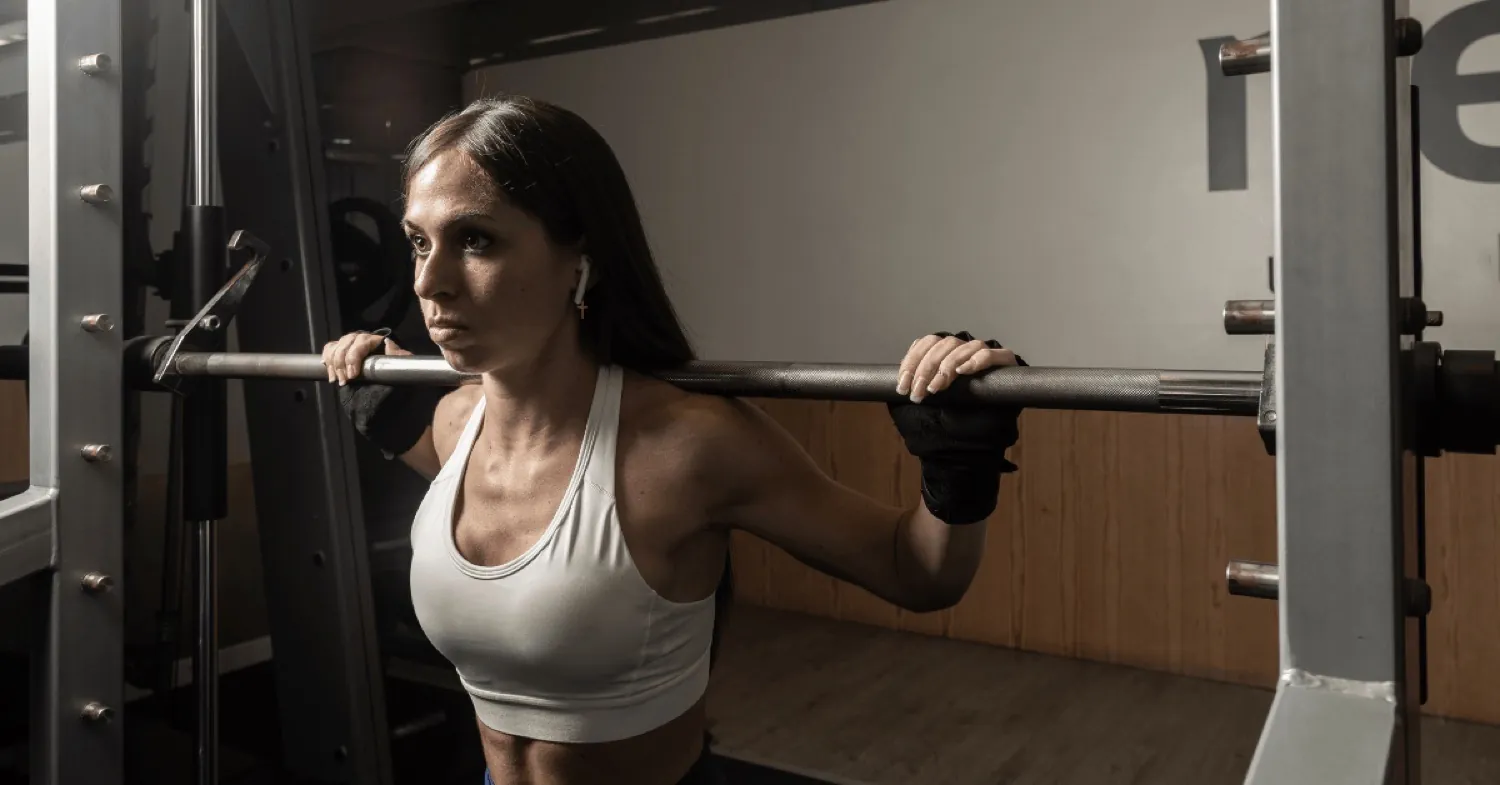
Your 40s can be a good time to build a consistent strength routine. Start with a few familiar movements twice a week, then add weight or repetitions gradually as you get more comfortable. Strength training can help build muscle and make everyday activities, like carrying groceries or spending time outdoors with family and friends, feel easier.
At Body Renew Alaska, our trainers can help you choose exercises that fit your experience, current ability, and goals. If you have not lifted in years, you do not need to start where you left off. Begin with a routine you can manage, focus on controlled movement, and build from there with guidance from a trainer. We want our members to maintain their strength through their 40s and beyond so they can support their quality of life and keep up with everyday activities. For another look at exercise and health after 40, see our guide to getting in shape after 40.
What are the benefits of strength training after 40?
The benefits of strength training after 40 are numerous. It’s possible for our over-40 members to improve their strength and muscle, along with enhanced mobility for everyday tasks. It is important because lifting, pushing, pulling, stepping, and getting up all rely on strength you can train in the gym.
Your calendar age is just a number and does not determine what you can accomplish or limit your training load. Training history, current ability, health, and recovery are more accurate markers for determining your after-40 fitness routine. Someone who has lifted regularly for years will likely feel comfortable with a different workload than a beginner of the same age. If you are returning to the gym after a long break, we recommend easing back into your routine and letting your progress determine when you advance your techniques and load. If you ever have questions about how you should train, our personal trainers are available for a consultation, and we also offer one-on-one personal training to help you customize your routine.
A useful first step is to record the exercise, resistance, repetitions, and check-in with yourself on how the set felt. Those notes help you see whether to repeat the same load, add a repetition, or choose an easier variation next time. Progress does not have to mean adding weight at every workout, and pacing yourself can help you prevent injury during your workouts.
Which strength exercises should you do after 40?
In your 40s, it’s time to build your routine around movement patterns that train your legs, hips, chest, back, shoulders, arms, and core. These are all areas of our body that need to be maintained over time to keep up strength. You can use free weights, machines, cables, or body weight exercises that feel comfortable to you. Choose the variation that lets you move comfortably and repeat the exercise with proper control and stamina.

We encourage our members to try a manageable number of sets and reps, and for those who need a joint-friendly option for these moves, we have recommendations listed here! Try these exercises below and see how they feel to you:
| Movement pattern | Starting exercise | Joint-friendly option |
|---|---|---|
| Squat | Goblet squat to a bench | Leg press or sit-to-stand from a higher bench |
| Hinge | Dumbbell Romanian deadlift (RDL) | Cable pull-through or shorter range of motion |
| Push | Elevated push-up or dumbbell chest press | Chest press machine with a comfortable range |
| Pull | Seated cable row | Chest-supported machine row |
| Step or single-leg work | Low step-up with support | Split squat holding a rail, or skip if uncomfortable |
| Core and carry | Suitcase carry or dead bug | Seated Pallof press |
Note that these are examples that you can space out over multiple workouts rather than trying to accomplish all of them in one single session. For a full-body beginner session, choose one lower-body move, one push, one pull, and one core or carry exercise. Add a hinge or step pattern when you are comfortable and have the energy.

How many sets and reps should you do?
For your first two weeks, try 1 to 2 sets of 8 to 12 controlled repetitions for each exercise, twice per week. Choose a load that feels moderate, keeps your technique steady, and leaves about 2 to 4 repetitions in reserve at the end of each set.
Rest about 1 to 2 minutes between sets, or longer if you need it to feel ready for the next one. If 8 repetitions feels difficult to control, reduce the weight or choose an easier variation. If you can do 12 easily and could keep going for several more reps, the exercise may be ready for a small increase.
The U.S. Physical Activity Guidelines recommend muscle-strengthening activity at least two days each week for adults, covering the major muscle groups. This is a healthy goal, but if you have been sedentary, start with one manageable day and build toward two days to avoid overexertion.
What is an eight-week strength training progression?
An eight-week plan should build consistency first, then add a little work or resistance while preserving good movement. Train two nonconsecutive days each week, such as Monday and Thursday, and use the same basic movement patterns long enough to practice them.
| Weeks | Focus | Plan |
|---|---|---|
| 1 to 2 | Learn and settle in | 1 to 2 sets of 8 to 10 reps per exercise. Use light to moderate resistance and practice smooth, pain-free movement. |
| 3 to 4 | Build repeatability | Aim for 2 sets of 8 to 12 reps. Add repetitions before adding weight. |
| 5 to 6 | Add a little challenge | If you can complete 12 reps in both sets with steady form and no lingering joint pain, increase the load slightly at the next session. Return to 8 to 10 reps with the new load. |
| 7 to 8 | Consolidate | Continue 2 sets. Add a third set to one or two exercises only if you are recovering well and sessions still feel manageable. |
This is just a starting framework and can be adjusted. If a week feels too demanding, repeat those exercises. If you miss a session, return to the plan at the next opportunity instead of trying to make up for it with extra volume. Progress comes from adding a manageable challenge over time, not from making every workout harder.

When should you add weight?
Add the smallest practical amount when you can complete the top end of your rep range with steady form, a controlled pace, and no sharp pain. For example, if your plan is 2 sets of 8 to 12 reps, reach 12 reps in both sets before increasing the load. Then expect to work near the lower end of the range again.
You can also progress by improving control, range of motion, or confidence with an exercise. More weight is only one form of progress.
How can you make strength training easier on your joints?
Choose a variation and range of motion that feels controlled and comfortable, and adjust it if pain changes how you move. Mild muscle effort is expected; sharp pain, worsening pain, or symptoms that do not settle are signals to stop and reassess.
Try these adjustments:
-
Use a machine or cable when stabilizing a free weight feels uncomfortable.
-
Reduce the load, range of motion, or number of sets before abandoning the movement pattern.
-
Raise the squat target, use a shorter step, or hold a support to make lower-body exercises easier to control.
-
Keep a steady pace instead of dropping quickly into a movement or forcing a stretch.
-
Warm up with several minutes of easy movement, then do a lighter practice set before your working sets.
An old injury does not automatically rule out an exercise, but your plan should account for your history and current symptoms. If you have a diagnosed condition, recent surgery, significant pain, or are unsure whether exercise is appropriate, check with your healthcare professional before working out. Our trainers at Body Renew Alaska can help adapt a workout, but they do not substitute medical care or guidance.
How can strength training improve daily life and mobility?
Strength training can help you move through daily tasks with more control by building the strength and coordination those tasks use. Sit-to-stands rehearse getting up from a chair, step-ups practice the leg drive and balance used on stairs, and loaded carries build strength for holding and moving everyday loads.
Mobility encompasses the strength and control to use a comfortable range of motion. Start with a range you can manage, use support where helpful, and progress gradually. If pain changes how you move or you have a health condition, ask your healthcare professional and communicate your needs to our trainers for insights on how to adapt the exercises.
Stephenie Johnson’s progress offers a firsthand example of strength and mobility improving together. After six months of training with Jay, she wrote:
“I love how strong and agile I am becoming.”
Stephenie Johnson, Body Renew Alaska member
Read Stephenie’s Member of the Month story for more about her experience.
How much protein do you need to support strength training?
For healthy adults who lift, daily protein intake will vary based on your need, overall health, dietary restrictions, goals, and total food intake. Including protein-rich food at meals, such as eggs, Greek yogurt, fish, chicken, tofu, beans, or cottage cheese, is a great start.
Research reviews find that adding protein can support gains from resistance training, with diminishing returns at higher daily intakes. The daily pattern matters more than racing to drink a protein shake the moment your workout ends. We recommend asking your clinician or registered dietitian what amount is appropriate for you.
How much rest do you need between strength workouts?
Leave about 48 hours between full-body strength sessions when you are starting out, and pay attention to how you feel before repeating hard work for the same muscles. Muscle soreness can happen, especially when you are new or returning, but should not be taken as the only sign that a workout was effective.
Sleep, enough food and fluids, and a repeatable schedule all support recovery. If soreness changes your movement, lasts longer than expected, or is paired with joint pain, reduce the next workout and reassess. Some people do well with two full-body sessions a week; others need to begin with one and build gradually.
What should you expect month by month?
In month one, expect to learn the movements and get used to being consistent. Early strength improvements often come from better coordination and confidence, so the weights may increase before visible changes appear.
In month two, some people notice that daily tasks feel easier or that they can use a little more resistance. Months three and four are a chance to keep repeating the plan, gradually adjusting loads, and noticing patterns in energy and recovery. By months five and six, many consistent trainees have a clearer picture of the movements and routines they can sustain. Visible muscle or body composition changes vary widely and depend on training, nutrition, sleep, health, and starting point. These are general milestones, not promises or deadlines. Track more than appearance: note your reps, weights, energy, movement confidence, and how you feel doing everyday activities.
Germaine Grant’s story is another example of steady training adding up over time. In his 40s, with support from coach Paul Norris, Germaine built consistency over more than a year and achieved his first pull-ups. He wrote:
“There’s still a lot I need to work on, mainly my nutrition, but I truly feel like I’m in the best shape of my life.”
Germaine Grant, Body Renew Alaska member
Read Germaine’s story for more on his progress.
Do men and women need different strength training plans after 40?
Most adults over 40 can use the same basic movement patterns: squat or sit, hinge, push, pull, and carry or brace. The right plan depends more on training history, goals, comfort, health, and recovery than on whether someone is a man or a woman.
For example, a woman returning to lifting after a knee injury may begin with a leg press and a limited range of motion, while a man who has lifted before may need to restart with lighter loads after time away. Men over 45 and women over 40 can both benefit from a progressive plan that fits their starting point. Menopause, joint symptoms, medications, and other health changes may influence an individual’s needs, so make adjustments with a qualified professional when needed.
Do you need special equipment or supplements to get stronger?
No, you do not need special equipment or supplements to get stronger after 40. A gym, home setup, or basic body-weight plan can all support strength training, and most people do not need a specific dietary supplement to begin. The most useful equipment is whatever lets you train consistently with controlled movement and gradual progression.
At home, that may mean a sturdy chair, a resistance band, or a pair of adjustable dumbbells. In a gym, machines, cables, and free weights all provide ways to train the same movement patterns. Protein supplements are convenient for some people, but a balanced diet can help you achieve your fitness goals. Check with a healthcare professional before adding any new supplements in your diet.
Start with a plan you can repeat
For your next workout, choose one squat or sit-to-stand, one hip hinge, one push, one pull, and one carry or core exercise. Begin with the first two weeks of the plan below, record your starting loads, and make one change at a time. At Body Renew Alaska, we are here to support your goals.
If you want help choosing exercises or adapting a routine that makes sense for you, learn more about personal training at Body Renew Alaska. Learn about Body Renew memberships and visit our South Anchorage location or BR Fitness in East Anchorage.
Frequently Asked Questions
How often should beginners strength train after 40?
Start with one or two full-body sessions each week. Two nonconsecutive days is a practical goal for many people, but one consistent day is a better start than an ambitious schedule you cannot maintain.
Can you build muscle after 40?
Yes. Adults can gain strength and muscle with regular resistance training, enough recovery, and appropriate nutrition. Results differ by person, and steady progress is more realistic than expecting a rapid transformation.
Is it better to use machines or free weights?
Both can build strength. Use machines if they help you learn a movement or feel more stable, and use free weights when you are comfortable controlling them. A balanced plan can include both.
Should you lift heavy after 40?
You do not need to lift maximal weights to make progress. Begin with a manageable load and gradually increase resistance when you can complete your reps with controlled technique and no concerning pain.
What if you have knee or shoulder pain?
Stop or modify any movement that causes sharp or worsening pain. Try a smaller range, lighter load, or a different exercise, and consult a healthcare professional if pain persists or affects daily activity.
What supplements support strength training after 40?
Supplements are optional. Start with regular meals that include protein, and consider a supplement only if it makes it easier to meet your nutrition needs. People with medical conditions or dietary restrictions should discuss supplements with a clinician or registered dietitian.
How do you choose a personal trainer for strength training after 40?
Look for a qualified trainer who asks about your goals, experience, health history, and concerns, then adjusts exercises to your ability. A good trainer explains the plan, checks your technique, and changes course when something is uncomfortable or not working.