Choosing the right Alaska gym comes down to one honest question: will this place still get you through the door in the dark, cold middle of February? Around Anchorage, the difference between starting a routine and actually keeping one usually is not willpower. It is whether the gym was built for how Alaskans really live: brutal winters, months of short daylight, and schedules that do not follow a 9-to-5 pattern.
I am Jay Millington, a former General Manager at Body Renew Alaska and I have spent more than 15 years in this industry. Every year we watch motivated people sign up full of intention, and a few months later a big share of them have quietly disappeared. It is a pattern we see again and again, and it almost always traces back to the same handful of factors. This guide walks through six of them: winter-ready access, location, amenities, pricing, coaching, and goal fit. Use it as a checklist before you sign anything.
Why is choosing a gym in Alaska different from anywhere else?
In most places a gym supplements an already active life. In Anchorage, for four or five months a year, the gym basically is your active life, so it has to be built for that reality.
When the trails ice over and it is dark before you leave work, the outdoor activities that keep a lot of Alaskans fit simply stop. That puts more weight on your indoor option, at exactly the time of year it is hardest to stay motivated. This is not just in your head. Research on high-latitude living found that roughly 9 percent of Alaskans meet the criteria for seasonal affective disorder, with far more experiencing the milder “winter blues,” and a separate study of Alaska adults found that staying physically active is associated with fewer seasonal mood symptoms. In other words, the gym is one of the best tools you have for the dark months, which is exactly why it has to be easy to keep using.
The nuance most people miss: a gym that does not plan for this, one without programming variety, real community energy, or engaged staff, will watch attendance collapse in deep winter, and your consistency goes with it.
Does 24/7 access and location really matter for an Anchorage gym?
Yes, and they are the first two filters to apply before you look at anything else. If a gym’s hours or location do not match your real schedule and commute, you will stop going, no matter how nice the equipment is.
In most cities gym hours are a mild inconvenience. In Alaska they can be the reason you quit. A winter storm rolls in, you pick up an overnight shift, or you build your workout around the few hours of daylight, and a gym that closes at 9 PM suddenly does not fit your life. True 24/7 access removes that friction. So does location: two gyms with identical hours serve you completely differently depending on where they sit relative to your daily drive. A gym that is already on your route is a gym you will actually use.
Here is the local nuance. Our two clubs sit on different commute corridors on purpose. If you live or work around Dimond or the Huffman corridor, our South Anchorage location is the easier pull. If your day runs through Muldoon, Abbott Loop, or the Glenn Highway, East Anchorage makes more sense. Having two options means most of Anchorage’s main travel patterns are covered, and both offer 24/7 access on the right plan.
Which amenities keep you consistent through an Alaska winter?
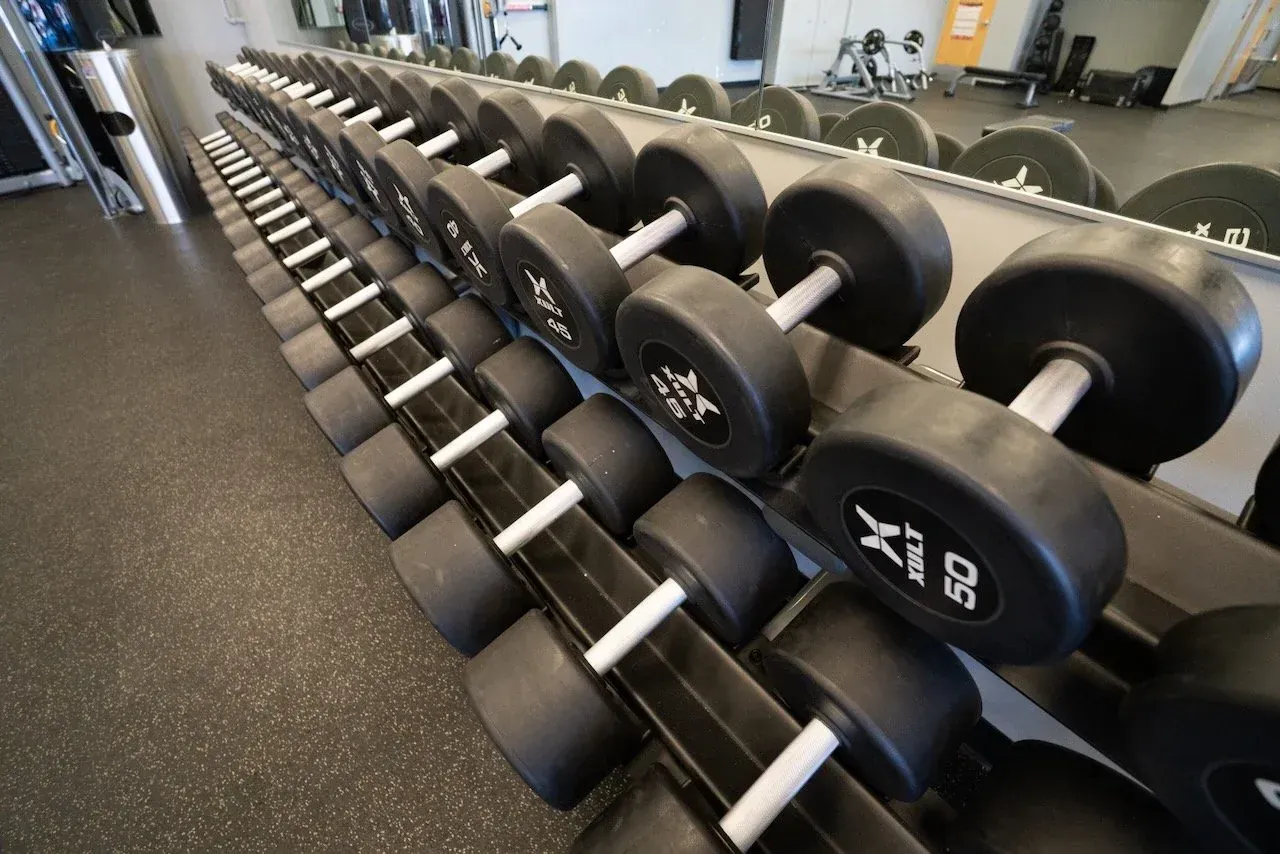
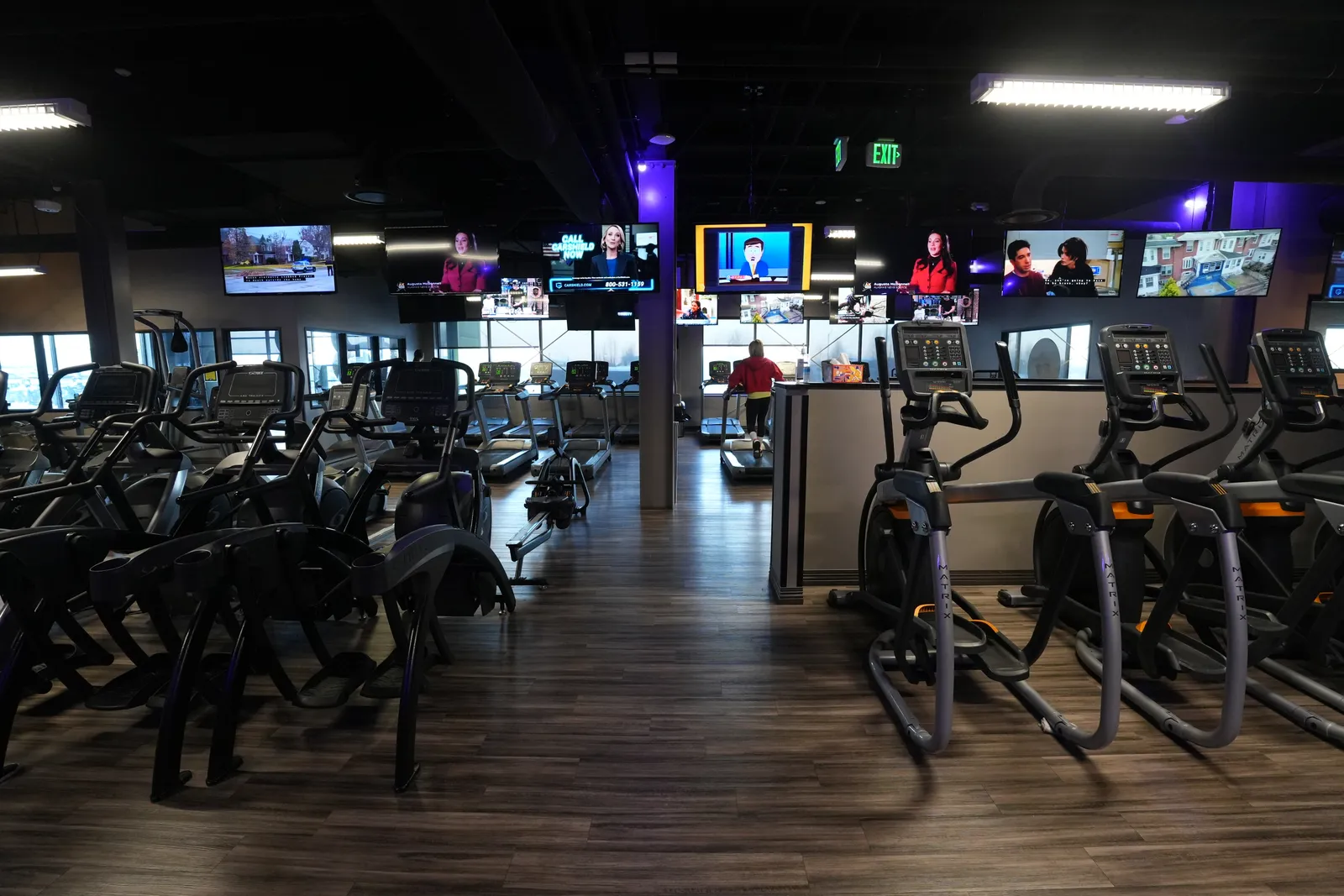
Equipment variety is table stakes. What actually keeps people coming back through an Anchorage winter are the amenities that support recovery, mental well-being, and connection, so look past treadmill counts to what a facility offers beyond the gym floor.
Does a gym sauna actually do anything?
Yes, and it is one of the most underrated amenities for Alaska residents. A large Mayo Clinic Proceedings review of the evidence links regular sauna bathing to lower cardiovascular risk, improved recovery, better sleep, and mental health benefits. When your body spends half the year managing cold exposure and long nights, that consistent warmth and recovery matters more than it would in a temperate climate. It is worth factoring into your comparison, especially since standalone sauna memberships in Anchorage often cost about as much as a full gym membership. Sauna access is included on our membership plans.
Do group classes help you stick with it?
They do, because a class does something a solo treadmill session cannot: it creates accountability through shared experience. When a room full of people expects you on Tuesday at 6 PM, you show up.
That accountability is not a soft benefit. The World Health Organization now identifies social connection as a measurable factor in better health and longer life, and in a long Alaska winter, the people you see at the gym are often the reason you keep going on the days you would rather stay under the covers. When you compare gyms, check whether the class schedule actually fits your week, not just whether classes exist. You can see the formats and times on our group fitness classes page.
How should gym pricing and contracts work in Alaska?
Favor no-contract billing while you are still building the habit, and judge the total cost of commitment rather than the monthly number. A long contract at a low monthly rate can cost far more overall than a slightly higher rate you can cancel anytime.
Long agreements carry real financial risk when you are still figuring out your routine, because if the gym does not stick, you are still paying. This matters more than people expect: research on why so many gym memberships go unused shows most of us badly overestimate how often we will actually go. That is why we built our membership around no long-term contracts, simple bi-weekly billing, and frequent $0 enrollment promotions, so your commitment can flex as your goals and schedule evolve. You can see current plans and pricing on our membership page, and we dug into the psychology of why gym memberships go unused.
Whatever gym you are considering, always ask two questions before you sign: what does early cancellation cost, and what happens to your membership if the facility changes ownership or locations? The answers tell you how much risk you are actually taking on.
What does good gym onboarding actually look like?
A real start, a baseline fitness assessment, a short-term plan, and time with an actual coach, is the single biggest predictor of whether you will still be a member a year from now. A key card handed over with a quick tour is not onboarding. It is the beginning of a slow exit.
Effective onboarding gives you three things: a clear picture of where you are starting, a plan you understand, and at least one session with a coach who can turn your goals into specific actions. Part of that picture should be real data. An InBody body composition scan uses bioelectrical impedance to measure your body fat percentage, skeletal muscle mass, visceral fat, and hydration, instead of just the single number on a scale. That baseline gives you something concrete to measure against, so you are not guessing whether your training is working.
This is exactly why we start every new member with a real onboarding: a free Starting Point consult to set your baseline and map your goals with a coach, with personal training available whenever you want a coach in your corner. Most gyms hand you a key card and hope for the best. As I tell our team, the goal of onboarding is not to get someone started; it is to build the routine that carries them through February. For a real example of what that looks like over six months, read Stephenie Johnson’s story, a member who rebuilt her strength and confidence in her fifties with a structured, coached start.
How do you match a gym to your specific goal?
The right gym depends on what you are actually trying to accomplish, so get specific before you commit. A competitive athlete and someone rebuilding fitness at 55 after a health scare need very different things from the same building.
- For weight loss and body composition change, you need measurable tracking, nutrition guidance, and accountability built into the experience. Generic access without that structure produces inconsistent results for most people. Our combination of InBody scans, nutrition planning, and regular coaching check-ins through personal training is built for this goal.
- For a busy or unpredictable schedule, 24/7 availability and no-contract billing are your first filters. Rule out any gym that cannot offer both, then compare amenities and coaching within that shortlist. Our membership options are built around that flexibility.
- For beginners and older adults rebuilding fitness, the environment matters most: a non-judgmental community, a structured starting plan, and coaches who adjust to your current level. This is where a good local gym earns its keep, and it is the exact situation we walk through in our guide to getting in shape after 40.
Make the decision that fits your life in Alaska
Choosing the right Alaska gym comes down to five things: access that fits your actual schedule, amenities that support year-round consistency, pricing you will not regret, a coaching structure that gives you a real start, and a community that keeps you accountable through the dark months. Not every gym in Anchorage checks all five boxes, and the ones that do not are where new members quietly disappear.
Body Renew Alaska was built around what Alaskans actually need: 24/7 access at two Anchorage locations, no-contract billing, sauna recovery, group classes, and a structured start designed to carry you past the first 90 days. If you have joined a gym before and quit within a few months, the structure, or the lack of it, was probably a bigger factor than your motivation.
If you are ready to find a gym that works the way you live, get in touch or stop by our South or East Anchorage clubs, ask about the InBody scan, and see what a structured start actually looks like. The habit you build from it is worth far more.
Frequently Asked Questions
What should I look for in an Alaska gym?
Look for five things: access that fits your real schedule (ideally true 24/7), a location on your commute, winter-ready amenities like a sauna and group classes, honest no-contract pricing, and a structured onboarding process with a coach. In Anchorage the gym has to work for months when it is your only realistic fitness outlet, so plan for the dark, cold stretch, not just the summer.
Do I really need 24/7 gym access in Anchorage?
For many people, yes. Winter storms, overnight shifts, and 5 AM starts built around limited daylight all make fixed staffed hours a common reason people stop showing up. If your schedule changes week to week, true 24/7 access at a location on your commute removes the easiest excuse to skip.
Are no-contract gym memberships better than long annual contracts?
While you are still building the habit, no-contract billing is usually the safer choice because it lets you adjust if your life changes. What matters most is the total cost of commitment, not the monthly number: a long contract at a lower monthly rate can cost far more overall than a slightly higher rate you can cancel anytime. Before signing anything, ask what early cancellation costs and what happens if the gym changes ownership or location.
Does a gym sauna actually do anything?
Yes. A large Mayo Clinic Proceedings review links regular sauna bathing to lower cardiovascular risk, better recovery, and mental health benefits. In Alaska, where your body is constantly managing cold exposure and long winters, that recovery and warmth is more valuable than most people realize.
Why do so many gym memberships go unused?
Research on unused memberships shows people routinely overestimate how often they will go, and without structure and community the habit never forms. Members rarely quit over price; they quit because they never built the routine, confidence, or connections that make a gym feel worth keeping. That is why onboarding and community matter more than equipment.
What is an InBody scan and why does it matter?
An InBody scan uses bioelectrical impedance to measure body fat percentage, skeletal muscle mass, visceral fat, and hydration, not just total weight like a bathroom scale. That gives you a real baseline to measure progress against, so you know whether what you are doing is actually working. For weight loss and body composition goals, it changes the whole tracking experience.